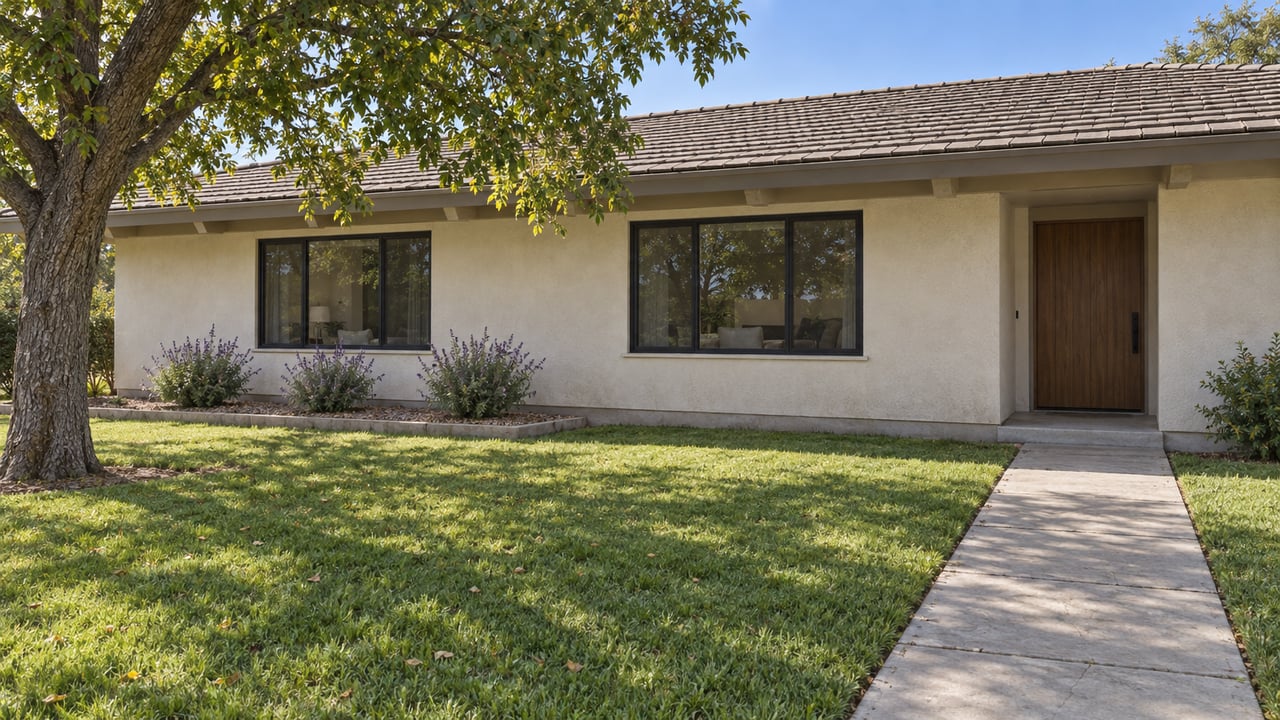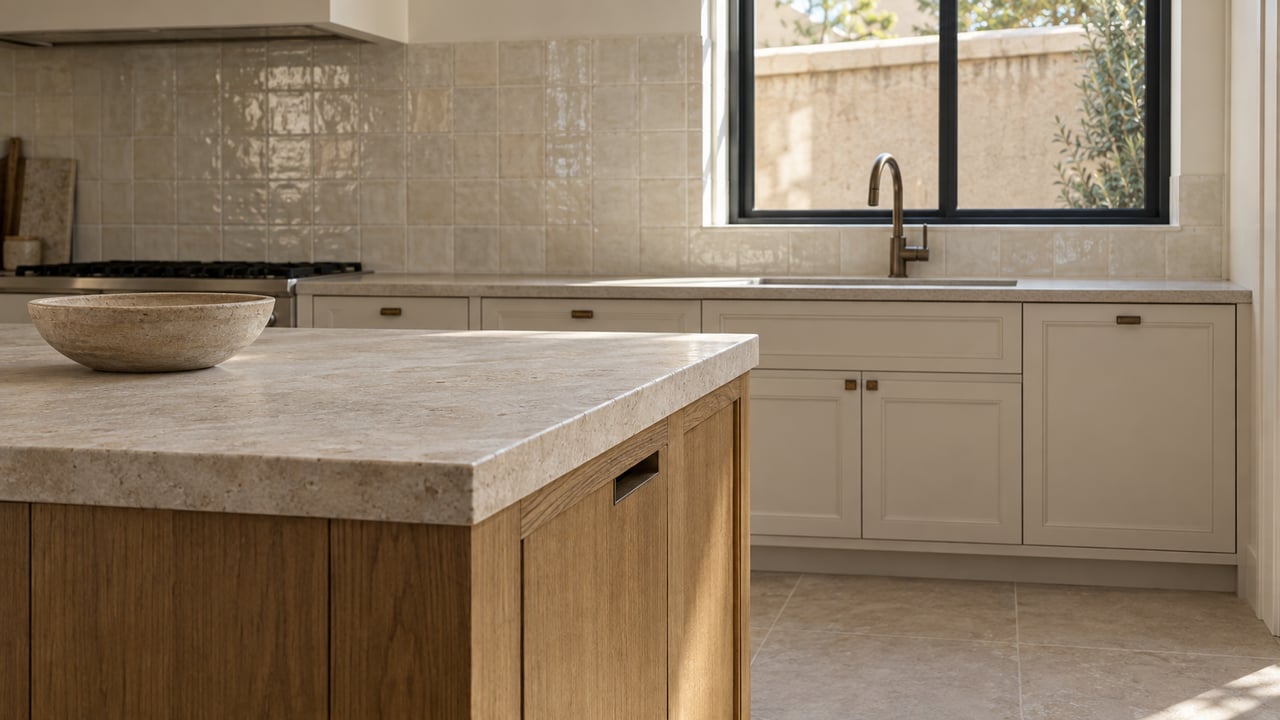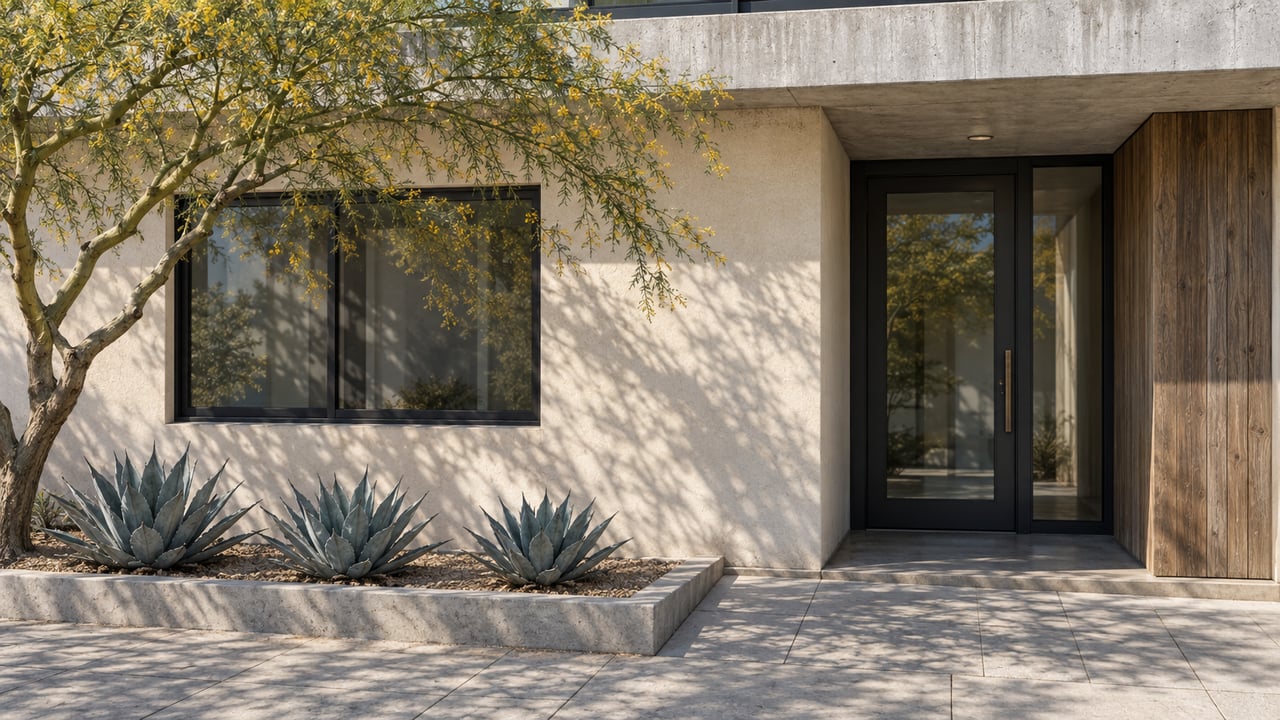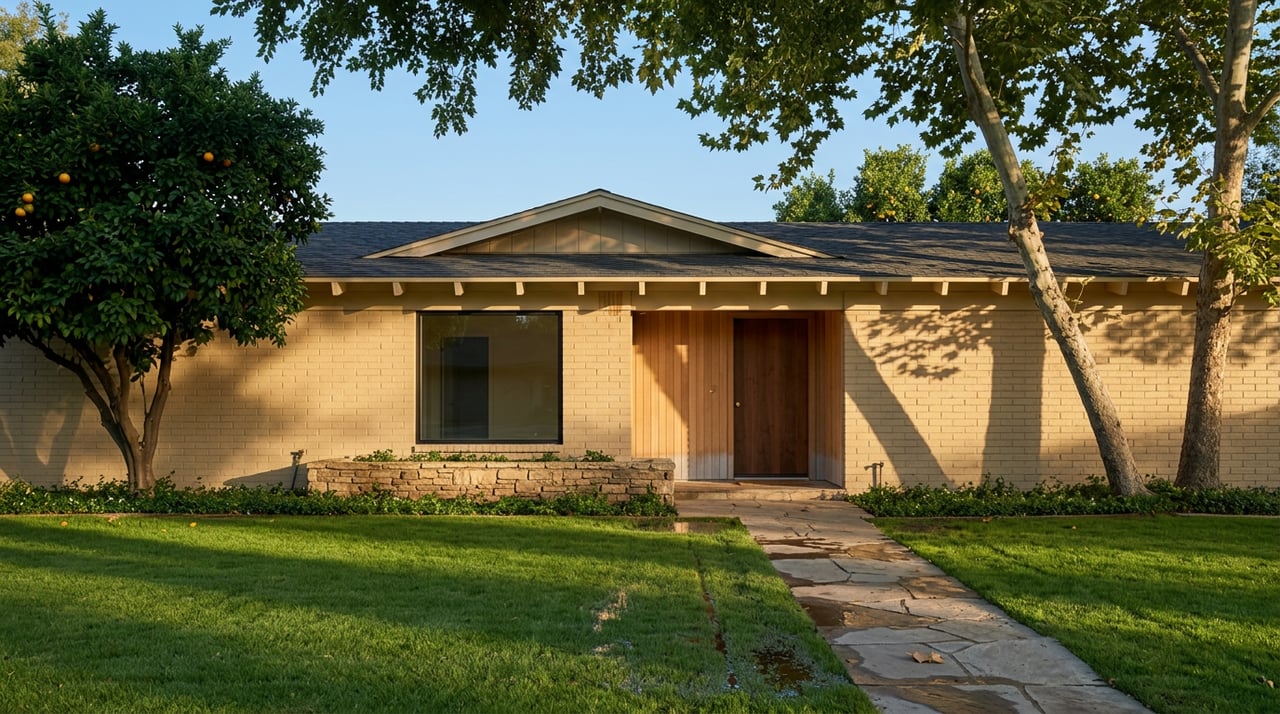
Two ranch homes sit four doors apart on the same Arcadia block. Both are 1958 builds, both roughly 2,400 square feet, both under the same Camelback view. One trades at $1.9M in a weekend. The other lingers past ninety days and eventually closes 11% under ask. The floor plans are almost identical. The lots are not.
The difference is a small metal gate at the corner of one property, and its absence at the other. That gate is a Salt River Project turnout, and in Arcadia it does more to explain price than any comp sheet, school-boundary map, or ZIP-level average a buyer is likely to read online.
The Arcadia premium is not a neighborhood premium. It is the price of a piece of gravity-fed irrigation infrastructure that cannot be built anywhere else in Phoenix, priced lot by lot, and it behaves like a physical asset with its own maintenance record.
The turnout is the asset
Arcadia was planted before it was subdivided. Arizona's first commercial citrus grove went in near 56th Street and Indian School in 1899, and when the groves were carved into residential parcels after World War II, the Salt River Project irrigation laterals stayed in the ground. Non-potable canal water still moves from main canals into neighborhood laterals and reaches individual lots through a small gate or box, then spreads across the yard by gravity through shallow channels or piping. Owners pay a modest annual assessment to the Salt River Valley Water Users Association and receive periodic deliveries every few weeks.
That is the mechanism behind the eucalyptus, sycamore, ash, palm, and citrus canopy that reads to visitors as "Arcadia." It is also the reason quarter-acre and half-acre lots here carry grass lawns in a metro otherwise defined by decomposed granite. New construction anywhere else in Phoenix cannot reproduce this at scale, because SRP flood-irrigation rights are tied to specific historic parcels and are not being extended.
For a buyer, this changes the shape of the decision. You are not really shopping homes. You are shopping turnouts, easements, and mature root systems, with a house attached.
What the July number actually hides
The commodity data for Arcadia in July 2026 puts the median sale price at $1,545,000, up 1.8% year over year, on 79 June closings, with average price per square foot around $618 and days on market at 74. That is the number the portals show. It is also the number that flattens the story.
The single-family quartile split from Altos tells a more useful version:
| Tier | Median | Days on Market |
|---|---|---|
| Top quartile | $4.995M | 77 |
| Upper quartile | $2.4875M | 45 |
| Lower quartile | $1.6198M | 49 |
The fastest-moving inventory is not the cheapest and not the most expensive. It is the upper-middle band, where a renovated irrigated ranch with a working turnout and a defensible lot orientation clears the market inside forty-five days. Sale-to-list ratios in 2026 average 95.1% neighborhood-wide, but renovated homes routinely trade within 2% of list, while tear-down candidates absorb 6% to 14% off the original ask after one or two adjustments. Cash makes up roughly 34% of Arcadia transactions overall, and above $3M the cash share climbs past 50%, according to the July 2026 arizonahomesandcondos.com Arcadia report.
The lesson is that "the Arcadia market" is at least three markets stacked on top of each other, and the median is a weighted average of buyers with very different problems.
Proper, Lite, and the block that flips
The name most non-locals miss is the split between Arcadia Proper, the historic core east of roughly 44th Street with the largest irrigated lots, and Arcadia Lite to the west, where mid-century lots are smaller and irrigation is less consistent. Both are desirable. They are not priced the same, and they should not be compared the same way.
The wider 85018 ZIP is broader still. It stretches past Arcadia's core, so ZIP-level medians pulled from national portals will understate Proper and overstate Lite in the same figure. A buyer who anchors on the ZIP median is measuring the wrong neighborhood.
School boundary assignment sits on top of this. Much of Arcadia Proper is served by Scottsdale Unified schools such as Hopi Elementary, Ingleside Middle, and Arcadia High, even though the addresses are inside Phoenix city limits and taxed on the Phoenix side. The boundary between Scottsdale Unified and Madison Elementary can flip on a single-block line, which means two comps on the same street can end up in different feeder patterns. That is a lot-level detail, not a neighborhood-level one.
Friction that shows up at inspection
The turnout is where the deal gets specific. Most general-practice agents in metro Phoenix have never written an offer where the buyer needed to verify irrigation delivery before removing contingencies. In Arcadia, that step matters, because irrigation rights vary lot by lot and the physical equipment ages.
Buyer due-diligence items that actually earn their place in an Arcadia contract:
- Locate the turnout. Confirm whether the gate or box sits inside the lot itself, in a recorded easement, or in a public right-of-way, and confirm it opens and closes without sticking.
- Pull the account. Ask the seller for the SRP turnout account information, recent assessment statements, and any ditch-company or neighborhood irrigation fees.
- Read title for easements. Lateral and ditch easements can appear on title and affect where a future pool, ADU, or addition can go.
- Inspect the on-site equipment. Valves, filters, backflow devices, and any automation should be checked by a licensed irrigation contractor experienced with SRP systems, not a general home inspector.
- Pull any turnout permits. If prior owners capped a turnout or converted zones to drip, ask for the City of Phoenix permits and any approvals.
- Look for drainage evidence. Standing water, erosion, or grading issues near the slab, patios, and shared property lines can point to how a lot actually handles a delivery.
None of this shows up on a listing photo. All of it shows up in a repair request or a renegotiation window if it was skipped.
Where the negotiation room is actually opening
The story most buyers are told about Arcadia is that everything sells fast for over ask. In mid-2026, that story is only partly true, and only in a specific band.
Realtor.com's year-over-year read on 85018 shows inventory up 14.77%, median list price down 2.46%, days on market up 14.81%, and price per square foot down 7.29%. Altos data shows 51% of single-family listings and 57% of attached listings in the area have had price reductions. New listings are down 8.6% year over year and pending sales are down 30.3%, which is why properly positioned renovated homes still see multiple offers while overpriced inventory sits.
Translated to the offer table:
- Under $2.5M, renovated, Proper, working turnout. Still a seller-leaning market. Write your cleanest offer. Expect competition and expect to trade within 2% of list.
- $2.5M to $4M, renovated. Balanced. This is the segment where the June closings on Exeter Boulevard and Mountain View Road landed. There is real room to negotiate inspection items when the buyer has documented the irrigation infrastructure.
- $4M and up, new construction or full remodel. Longer market times, 7% to 14% off original ask after adjustments, cash share above 50%. Named builders currently active in this tier include Cullum Homes, Sever Custom Homes, Bedbrock Developers, Calvis Wyant Luxury Homes, and Thomas James Homes, and each has a different pricing discipline once a home has sat.
- Tear-down lots. Structurally scarce, since Arcadia is fully built out. When one comes to market, builders compete aggressively for buildable irrigated parcels, and original-condition inventory typically clears inside a month.
The buyer who tries to write a single offer strategy for "Arcadia" will misprice at least two of these four segments.
What this means if you are selling
If you own a home with active irrigation, the highest-leverage thing you can do before listing is assemble a small binder. The SRP turnout account details, a written schedule of how you run a delivery, maintenance logs for filters and valves, any backflow test results, and permits for prior turnout modifications. A buyer who sees documentation writes a stronger offer, because the unknown is what triggers repair requests and price cuts. In a segment where 51% of single-family listings have taken a reduction, removing one line item of uncertainty is not cosmetic.
The other move is presentation of the lot itself. In Arcadia, the yard is a meaningful percentage of the value. A dry, patchy lawn in listing photos tells the buyer the turnout has not been run recently, and it is difficult to unsell that impression later.
Quick answers
Is flood irrigation expensive to run? The SRP assessment is modest relative to potable water use for equivalent landscaping. The real cost sits in equipment upkeep, tree care on mature canopy, and the electric load of cooling a larger, older home in summer.
Can I convert an irrigated yard to desert landscaping? You can, and some owners cap the turnout or convert zones to drip. Any conversion should be documented with the appropriate City of Phoenix permits, because it becomes a disclosure item when you sell and a due-diligence item when the next buyer's inspector arrives.
Does every home in the 85018 ZIP have irrigation? No. Rights are tied to specific historic parcels. Two homes on the same block can have different irrigation status, which is exactly why the block-level walk matters more than the ZIP-level chart.
Are Arcadia Lite homes a compromise? They are a different product at a different price. Smaller lots, less consistent irrigation, and a friendlier entry point. Whether they are the right fit depends on how much of the Arcadia premium a buyer is actually paying for the yard versus the walkable dining at La Grande Orange, Postino, Chelsea's Kitchen, The Henry, and Buck and Rider, which serve both sides of 44th Street equally.
If you are trying to price an offer, prepare a listing, or figure out which side of the ditch a specific home sits on, Francine Dinh walks Arcadia blocks the way this market rewards. Let's connect.