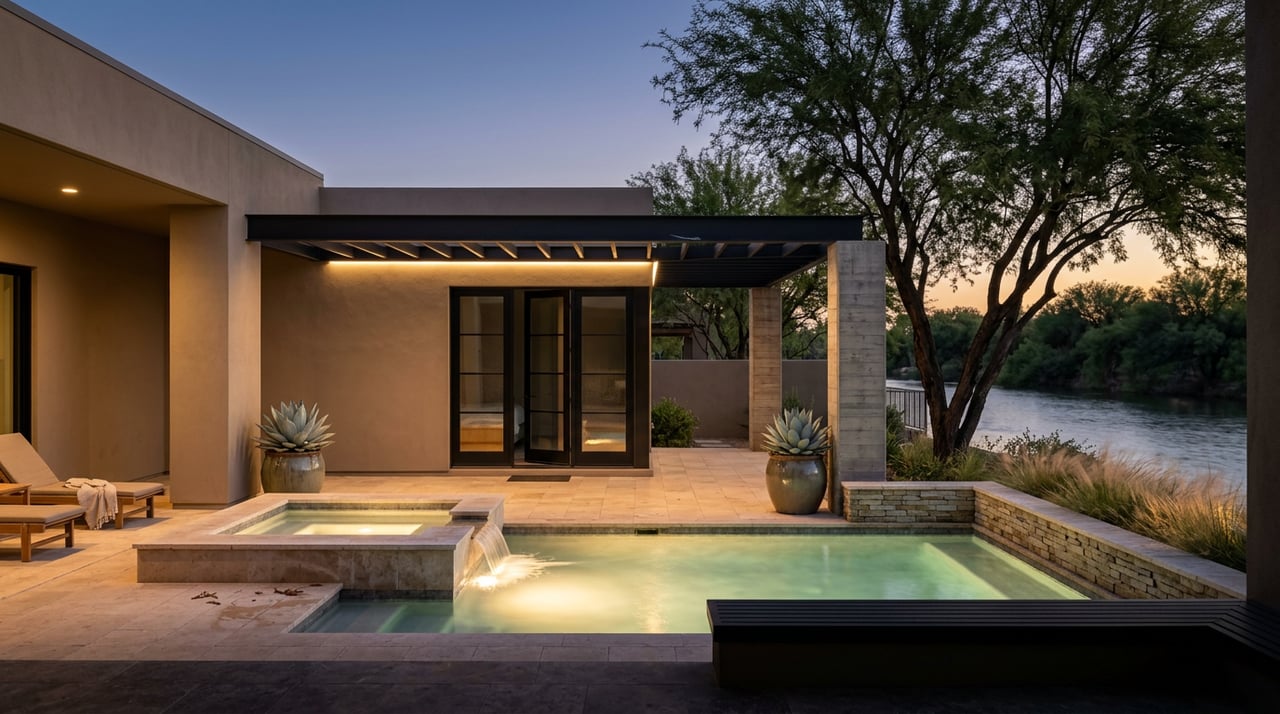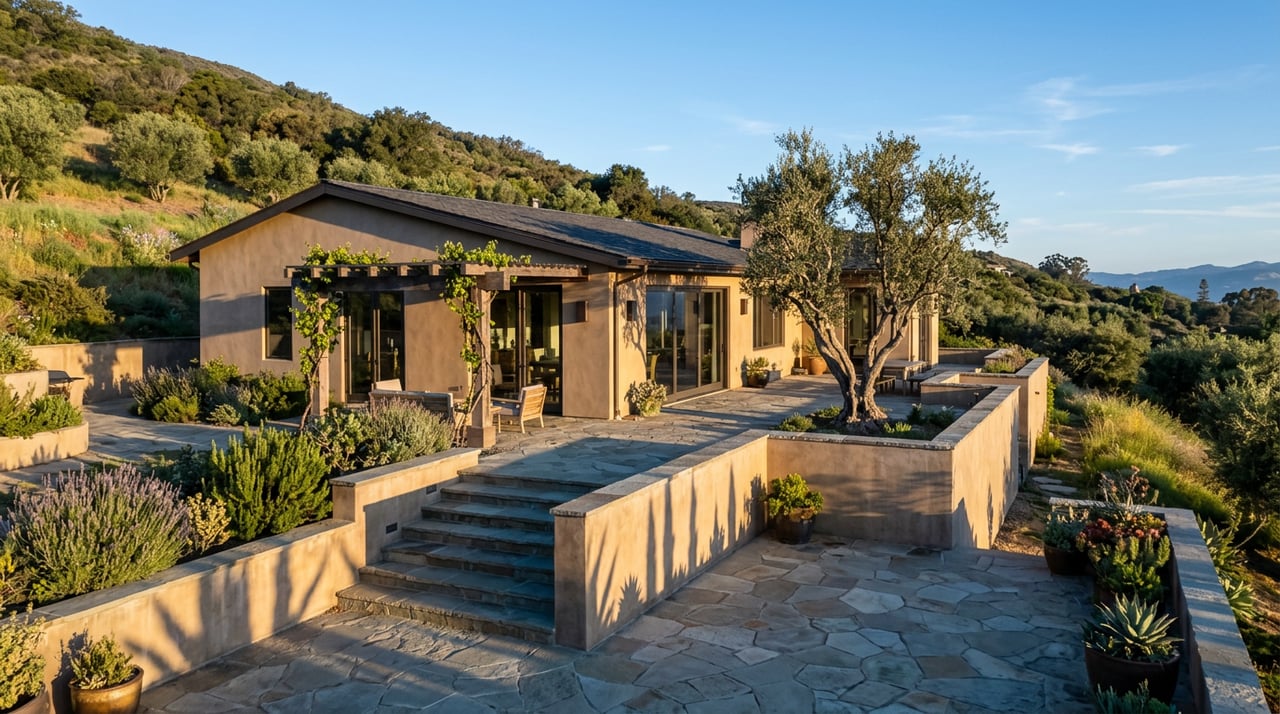
Two vacant lots can sit half a mile apart in Paradise Valley, carry nearly identical acreage, and be worth wildly different amounts before anyone breaks ground. One recent listing near Mummy Mountain marketed its lot specifically because it sits on a gentler grade, calling out a more forgiving hillside classification as the reason a buyer could build significantly more house than a neighbor on a steeper parcel. Another listing on a hillside site did the opposite: it sold the fact that a full Hillside Review and permitting process was already finished, sparing a buyer years most custom builds spend waiting on approval.
Neither listing led with square footage or price per acre. Both led with process. That is the part of buying land here that portals do not explain, and it is the reason the acreage on a listing sheet tells you almost nothing about what you can actually build.
The rule that decides your buildable footprint isn't your lot line
The Town of Paradise Valley regulates hillside development under Article XXII of its Zoning Ordinance, administered by the Hillside Building Committee, a body made up of citizen appointees and rotating Planning Commissioners who review grading, height, lighting, materials, and drainage on any parcel the town classifies as hillside terrain. The ordinance text sets that classification at any slope of 10 percent or more, and its stated purpose is direct: protect the ridgelines and foothills that define the town's skyline while still allowing owners to build.
What that means in practice is a sliding scale on how much of your own lot you're allowed to touch:
| Building-site slope | Maximum lot disturbance allowed |
|---|---|
| 10% | Up to 60% |
| 15% | Around 34% |
| 25% | Around 13% |
| 50%+ | Single digits |
Disturbance covers grading, cutting, filling, removing native vegetation, and trenching, not just the building footprint. A three-acre parcel at a 25 percent slope might legally allow you to touch less usable ground than a flat half-acre lot near Lincoln Drive. A wash cutting across an otherwise gentle lot can pull the whole parcel into hillside classification even when most of the ground reads as flat on a listing photo. That is the trap: buyers price land by acreage and square footage, then find out during due diligence that slope, not lot size, sets the ceiling on what they can build.
The 10 percent threshold comes straight from the ordinance, but classification in the field can be more situational than the number suggests, since some parcels near that line get treated differently depending on where the grade change sits on the lot. If you are under contract or close to writing an offer on anything with meaningful topography, confirm the parcel's actual hillside classification with the Town's Planning Department before you assume a disturbance percentage. Guessing here is expensive.
Why hillside construction costs run so far past a flat lot
Custom construction in Paradise Valley generally runs from $500 to over $1,000 per square foot, but that range splits hard once slope enters the picture. On a flat lot near the Lincoln Drive corridor, site work and foundation typically make up 10 to 12 percent of total project cost. On a hillside lot where crews are drilling piers into granite, building multi-tier retaining walls, and trenching utilities through rock, that same category can climb to 25 to 30 percent of the budget before a single interior finish is chosen.
That gap shows up again at the high end of the market. Luxury-grade construction on premium hillside lots was commanding $1,400 to $2,000 per square foot as of May 2026, according to a local market report, well above the townwide custom-build range. Raw land itself carried a similarly wide spread in 2025 and 2026, with one-acre parcels trading anywhere from $1.5 million to more than $5 million depending on slope, views, and access.
None of this is padding. It's the direct cost of building on ground the ordinance limits you to disturbing sparingly, which forces more engineering into a smaller footprint rather than less.
What a record sale actually paid for
In April 2026, a contemporary hillside home in Paradise Reserve, a gated enclave bordering the Phoenix Mountain Preserve, sold for $12.25 million, setting a resale benchmark at roughly $1,938 per square foot. The sale was reported by both the Paradise Valley Independent and Arizona Foothills Magazine as a new resale high for hillside product in town.
Paradise Reserve was built out by Cullum Homes, a Scottsdale-based, family-owned builder that has operated in Arizona since 1985. The 46-home community sold out entirely, joining another sold-out Cullum project, the Village at Mountain Shadows, as evidence of sustained demand for view-driven hillside product even during a period when other luxury builders were pulling back from similar sites.
The number that matters isn't the $12.25 million. It's the $1,938 per square foot on a resale, well above the $1,400 to $2,000 range quoted for new luxury-grade hillside construction earlier in the year. Buyers at that price point aren't paying for square footage. They're paying for a house that already absorbed years of grading engineering, retaining wall design, and Hillside Building Committee review, on a lot where the ordinance guaranteed the builder could only use a fraction of the parcel to begin with. Scarcity of buildable area, not size, is what the premium reflects.
The enclaves aren't interchangeable, even within the same zip code
Clearwater Hills, a guard-gated community on the southwest slope of Mummy Mountain established in the 1960s, typically sees sale prices between $3 million and $10 million, with the most architecturally significant hillside parcels occasionally clearing $12 million. Every one of those homes sits under the same Hillside Building Committee review that governs Mummy Mountain and the Camelback Mountain foothills, since much of that terrain now falls under permanent conservation through the Paradise Valley Mountain Preserve Trust, a nonprofit founded in 1997 that has placed more than 260 acres under easement.
Compare that to a flat, non-HOA parcel in the western estate corridor near Lincoln and Tatum, where new construction can proceed without the added design review, view-fence rules, or extended permit timeline that hillside parcels require. Both areas carry the Paradise Valley name and the same zip code. They do not carry the same construction runway, and a buyer comparing list prices across the two without accounting for hillside status is comparing two different products.
Buying pre-approved versus starting from zero
One listing currently on the market illustrates the timeline cost directly. It offers a nearly complete architectural design by a well-known Valley firm on a hillside site that has already cleared Hillside Review and permitting entirely. The listing frames this as a real advantage over a traditional custom build, since a buyer starting from scratch on a comparable hillside parcel can expect one to three separate Hillside Building Committee meeting cycles before approval, a process that regularly stretches into years once design and engineering are factored in.
For a buyer serious about a hillside lot, checking Hillside Building Committee approval status before writing an offer is not optional due diligence. It's the difference between moving into a finished plan and spending two or three years in a review process with no guaranteed outcome. It also explains why two lots with similar asking prices can represent very different amounts of real, usable value.
What this means if you're selling a hillside home
If your Paradise Valley property sits on a hillside lot or has had significant exterior work done, buyers in this price range will ask for permit and Hillside Building Committee approval records before they get comfortable, not after. Grading permits, as-built plans for retaining walls, and documentation of drainage work all support a smoother transaction when they're gathered before the home goes live rather than requested mid-escrow. Arizona sellers are also expected to disclose known material facts affecting value, delivered through a Seller's Property Disclosure Statement, and homes built before 1978 carry an additional federal lead-based paint disclosure requirement.
None of this replaces working with an inspector or attorney on the specifics of your transaction. It does mean that in a market where roughly 40 to 60 homes close townwide in a given month, according to a mid-2026 market report, a hillside seller with clean permit records is competing from a real position of strength against one who isn't ready to answer the first question a buyer's team will ask.
A few questions worth asking before you go further
Does the 10 percent slope threshold apply to my entire lot, or just where I want to build? It applies to the disturbed area you propose to grade, cut, fill, or clear, not simply the building footprint. A lot can read as mostly flat and still trigger hillside review if a portion crosses the slope threshold, particularly around washes.
Is every property called "Paradise Valley" governed by the same ordinance? Not necessarily. Confirm which municipality actually has jurisdiction over your specific parcel before assuming Article XXII applies, since name and zip code alone don't guarantee it.
How long does Hillside Building Committee review typically take? Recent guidance from builders active in the area puts a typical hillside project at one to three Committee meeting cycles before approval, on top of standard design and engineering time, which is why buying a lot with review already completed can save real time.
If you're weighing a hillside lot, a flat parcel, or a resale that's already cleared Paradise Valley's review process, the numbers on a listing sheet won't tell you which one actually fits your budget and timeline. I can walk you through what a specific parcel's slope classification means before you write an offer. Francine Dinh — Let's Connect.